When I went to CTIA last month I noticed something cool at most of the monorail stops. There were large mats close to where you would board, and on the mats you could see fish swimming around. If you stepped on it, you would see water rippling and the fish would scatter accordingly. There wasn’t anything around to identify the mat, and it was too bright out to get a good picture, so didn’t think about it anymore once I had left. Then I saw something about an exhibit at the Science Museum in London which looked very familiar.
I can only imagine that what I saw in Vegas was done by the same company. The Living Image, as it’s called, uses a 6,500 lumens overhead projector and a slew of sensors to create the images on a mat. Multiple people can interact with it just by walking around on the mat. I thought it was cool, and it certainly made the wait for the Monorail go by quicker.
Ever wonder what it would feel like to be in the driver’s seat of an RC car as it races around your house? While you can already buy remote control vehicles that feature a built-in video camera, I like the fact that this standalone wireless camera is small enough to use with even the miniature Bit-char G RC cars that were so popular a few years back. The camera unit features a 2.7 megapixel color CMOS sensor and a rechargeable battery that’s good for about 45 minutes. Given it’s just under an inch and a half on its longest side, that’s pretty impressive. It’s able to transmit the 1.2GHz video signal about 98 feet to the included Morse type s receiver, which can then be connected to a television set with a composite video cable.
The mini video camera also features a waterproof case allowing it to be attached to an RC submarine or boat without the fear of H20 ruining your fun, and you can get it from the Japan Trend Shop for $269.
SANYO today announced a couple of new projectors in their ‘T’ Series line designed for the education and business presentation markets. The PLC-ET30L features a 1400 x 1050 resolution with 10-bit gamma correction which is the perfect way to make PowerPoint’s default blue gradient background really pop. It also has 4200 lumens allowing it to project a bright image even in an environment where the lights can’t be turned off. SANYO also announced the PLC-XT21/L projector which is a value priced version of the ET30L with a reduced resolution of 1024×768.
Both projectors feature a whisper quiet fan that produces just 35 dBA of noise, and something called the One-Way Flow System which uses a single intake and exhaust vent with easily accessible dust filters. They also come with SANYO’s PJ Network Interface which allows you to monitor the projector and adjust any settings from a web browser. While it requires you to buy the optional POA-PN03C networking module for this functionality, it’s a great solution if the projector ends up mounted on a high ceiling. With a lens the PLC-ET30L will set you back $6,495 while the PLC-XT21/L is a bit cheaper at $4,495.
While video projectors have come down in price and size over the years, it seems there’s still a trade-off between image quality and resolution vs. portability. So while the specs on this micro projector are kind of vague, I think you can safely assume you’re not going to end up with an experience like you’d get at a digitally equipped movie theater. On the back of the projector is an SD card slot, and from what I can tell it can play a variety of digital video formats, as well as MP3s and even photos. But it also includes composite audio and video connections for connecting a DVD player or gaming console.
It’s powered by a set of 4 AA batteries which give it a maximum projection of about 40 inches x 33 inches. Not particularly impressive for a home theater, and I can’t imagine the battery life is that great either. It’s available from DrinkStuff.com for about $197, so we’ll just file this under ‘you get what you pay for.’
This animated short from Pixar, entitled Lifted, was shown in theaters just before Ratatouille. If you missed out, it’s worth watching, and if you’ve seen it already, I’m sure you’ll agree that it’s worth watching again. Enjoy.
While thin and highly compact laptops have become very popular these days, the UCCTOP XENO is bucking that trend by being a monstrous, briefcase sized system. But what it lacks in portability it more than makes up for in terms of functionality, particularly if you’re in the business of streaming broadcasts to the web.
While editors will love the built in jog/shuttle wheel, the UCCTOP XENO seems more tailored for running live productions since it has a built-in 4 channel video switcher and a 6 channel audio mixer with actual faders. It’s also capable of inserting subtitles and corporate logos during live broadcasts, and can be used to remotely control video cameras or other playback devices like VTRs and DVD players. And even with a price tag of around $10,000, it’s probably still cheaper than buying a standalone video switcher and audio mixer.
If you’re planning your own Survivor or Big Brother type reality show, you’ll need a way to capture those dramatic moments that happen when the lights go down. So just slap one of these Infrared LED lights on your camcorder and you’ll be guaranteed footage that will put your ratings through the roof. (If your show ever goes to air.) The Night Vision Video Light from Sima connects to the standard shoe mount found on most consumer and prosumer camcorders, and uses 36 infrared LEDs to let you shoot in near to absolute darkness.
The light also has an interlocking design allowing multiple units to be connected together, extending its range from about 10 feet up to 75 feet. It’s powered by its own lithium ion rechargeable battery so it won’t draw power from the camera itself, and the LEDs give it an average operating life of about 50,000 hours.
You can find it at B&H for $79.99, and if you’re curious I’ve included a video after the jump showing the light being used to capture a family of porcupines at night. It’s no where near as dramatic as your average reality show, unless you’re really scared of those pointy quills.
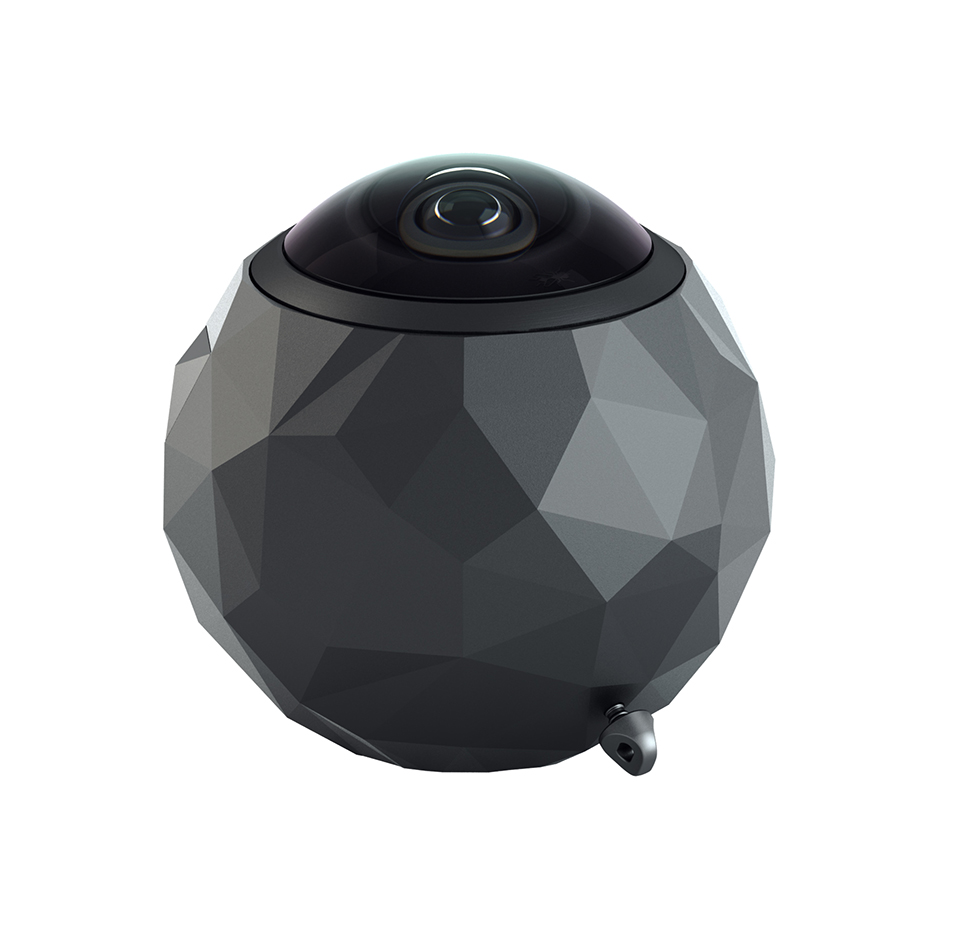
Immersive Media is the company responsible for Street View on Google Maps. The above video experience is the same idea (a 360 degree panorama of imagery), except in seamless full motion video. You can pan and zoom in every direction besides straight down while the video plays, and enjoy 4 channel directional sound. There are a bunch more demos on the Immersive Media website, but I liked the Humpback video the best, because it’s as if you’re actually standing in the boat, looking around, trying to spot the whales.
The camera system is shaped like a dodecahedron, made up of 11 cameras and 4 mics. It records 2400×1200 pixels at 30 frames per second, and you can easily embed GPS data directly into the video, up to 3 hours of which is recorded onto hot-swappable HDs. The entire system weighs in at only 25 pounds, so it’s actually something you can walk around with. If you want to know how much it is, you’ll have to ask. Immersive Media is currently mounting their system on vehicles and doing Street View-ish tours in a few North American cities, perhaps in the hope that Google will get interested.
Personally, I’d like to see it combined with the VR portion of the HARV system that I wrote about today over on BotJunkie… Talk about an immersive experience!
It might look like another boring candybar-style cellphone, but the DV300T from Mustek is actually a compact digital video camera. While the 2-inch LCD screen is not as convenient as the pop-out swivel screens on other tapeless video cameras, the DV300T seems to be going for a slim design over everything else.
It includes a standard VGA CMOS sensor which is fine for capturing near-NTSC or PAL quality video, but for still photos the images are actually interpolated to a resolution of about 3.1 megapixels, which isn’t exactly ideal. Since the lens is fixed, you have to rely on an 8x digital zoom for getting in closer to the action, but the DV300T at least includes some level of digital image stabilization to help improve your footage. On-board you’ll only find about 64MB of memory, but it will accept SD cards allowing you to considerably expand the amount of storage. Of course Mustek has also thrown in voice recording, MP3 and even eBook functionality, but what doesn’t have those these days?
Unfortunately I can’t find any pricing info for the DV300T, but given the basic VGA sensor and the paltry amount of on-board memory, I can’t imagine it will be that expensive.
Sometimes I wonder if the people from the RIAA and the MPAA ever sit down and fabricate new ways to pin poor sales of music and/or movies on today’s youth. Actually, after reading the latest announcement from the MPAA, I’m almost positive that they do just that. If you remember way back in 2005 they released a statement saying that 44% of their lost revenue comes from college students downloading pirated movies over the campus networks. According to their most recent study, that number was a complete fabrication (they call it human error).
Now they would likely argue the point and say that they weren’t making that number up at all However, when their latest reports show that the percentage of revenue lost may actually be closer to 3%, I have trouble believing it.
I actually did a little study just now, don’t ask where my figures come from, it’s not important. My study shows that the MPAA and RIAA would regain 110% of the lost revenue from piracy if they would stop spending so much money trying to sue their own customers. You’d be surprised at how many people still actually go to the movies when they’re actually good, and buy them when they come out on DVD.
If you’re still worried that my numbers may be a bit off, don’t fret. There’s a chance in a few years I’ll actually do the study and correct them. Until then, just go with it.