|
|
Search Results
by David Ponce

By David Ponce
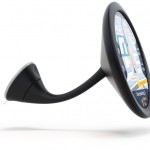
We’ve been chronicling Russia’s Art Lebedev studios’ products for a long time. Ever since the Optimus Maximus keyboard, actually. Now we’re hearing about the Navigarius GPS concept. Its features are nothing out of the ordinary, it’s a GPS mapping device that attaches to your windshield like so many others, has touchscreen controls, USB, microSD, cigarette lighter adapter and a thin, detachable stand.
But it’s round.
Really, that’s its claim to fame and to be honest, we think it looks swell. If you’re going to be staring at this thing while trying hard not to get lost, it might as well look half decent. Of course, like many of Art Lebedev’s products, this is a concept that may or may not go into production. Pester them long enough and it might become reality, like with the Maximus Optimus. Just don’t expect it to be cheap.
Once again, keep reading for a few more pictures.
(more…)
by Evan Ackerman

By Evan Ackerman
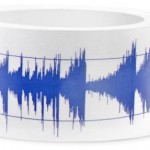
There is of course no way to improve on tape after 3M came out with this nuclear grade stuff. But that’s not going to stop Art Lebedev from trying… This roll of authentic 3M packing tape comes with an equally authentic sound wave emblazoned upon it. What’s the sound wave a sound wave of? I have no idea, but I’m guessing it’s something like, “this tape costs three times as much because it’s got a sound wave on it.” And it does cost more, but not that much more… $5.77 for a 60 meter roll.
[ Art Lebedev ] VIA [ New Launches ]
by Chris Scott Barr

By Luke Anderson
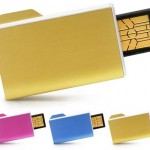
If you’re ever looking for a way to show off your individuality in the workplace, you could always redecorate your cubical in some sort of tropical theme. If you’re not that outgoing, there’s always the option of buying a fancy USB flash drive. These Folderix drives will definitely turn a head or two.
These sleek folder-themed drives come to us from the Art. Lebedev Studio, which is most noted for their extremely expensive (and awesome) Optimus Maximus keyboard. Sure, these drives aren’t as cool as a keyboard with tiny LCD screens, but they’re still not too hard on the eyes. They’re a bit pricey though, as a 4GB model will run you $55.
[ Art. Lebedev Studio ] VIA [ Dvice ]
by Evan Ackerman

By Evan Ackerman
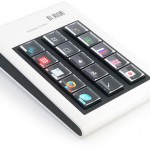
If you have an ounce of sense and haven’t blown $1.5k on an Optimus Maximus keyboard, you can (eventually) satisfy your craving for bite-sized OLED buttons with the Optimus Pultius, a 15 key programmable OLED keyboard accessory and the latest promised offering from Art Lebedev. It’s functionally no different from the fullsize 113 OLED Maximus, using the same key hardware with the same configuration software and a USB port on the back. There’s no price announced yet, and the Pultius should be showing up by the end of this year.
It sort of seems like Art Lebedev is trying to milk their OLED keys for a little extra scratch, perhaps because the cost of the Optimus Maximus is so prohibitively high that I can’t imagine they’re flying off the shelves, despite the hype. But heck, what do I know… I do know that personally, if I want an OLED key fix, I’d just stick with the currently available and presumably cheaper Optimus Mini Three. Or better yet, some Siftables.
[ Art Lebedev ] VIA [ Optimus Livejournal ::cough:: ]
by Evan Ackerman

By Evan Ackerman
If you can’t afford the Optimus Keyboard (and seriously, who can), you are currently able to sate your lust for programmable OLEDs with the Optimus Mini Three, which is a three buttoned/screened version costing a mere $150. According to the Art Lebedev blog, there is an Optimus Mini Three, version… Three… In the works. They say it’ll be “a completely new design,” called the “mini Tactus,” which will incorporate “one small sensor display divided into three (maybe more) zones.” Something with a touchscreen, maybe, if I know my Latin roots. It will also feature Bluetooth connectivity to get screen information from your computer, and will be “AC-powered.” So, um, it won’t be wireless at all? Maybe we’ll get some more updates, and some design tweaks, in the near future.
[ Optimus Blog ] VIA [ Gizmodo ]
by Andrew Liszewski

By Andrew Liszewski
The Teleport 2.0 is an innocuous looking device which allows a telephone to be connected to a PC via USB. Using a Windows-only piece of software called Paliha-Teleport, the PC can then be used to not only record logs of incoming and outgoing calls but can also be used to record entire conversations as an audio file. There have been a few times when I’ve conducted telephone interviews and a device like this would have been extremely handy for recording the other person’s answers, instead of me having to furiously type away in the background.
And of course there’s the obvious spy-related uses as well, whether you’re trying to monitor your employees, kids or anyone else you think is out to get you. The Teleport 2.0 works with touch-tone or pulse dialing phones, can also be used to dial numbers stored in your PC’s phone book and is compatible with Russian and American caller ID standards. So whether you’re a KGB or CIA agent, this device should work for you.
It’s available on the Art. Lebedev Studio website for about $71.
[ Teleport 2.0 ] VIA [ Spy Review ]
by Andrew Liszewski

By Andrew Liszewski
Here’s more proof that a useful gadget doesn’t necessarily have to be high-tech. The TaskWatch Whiteboard from Art. Lebedev Studio (yes, the same people who make the Optimus Maximus keyboard) is basically your standard whiteboard but with the addition of a traditional analog clock in the center.
Using regular whiteboard markers you can not only use the board for brainstorming and jotting down ideas, but you can also keep track of when you’re expected to deliver said ideas to the boss. The company is currently selling a 90×60cm version on its online store but in true Art. Lebedev Studio style the TaskWatch will cost you $202.70! I know whiteboards aren’t cheap, but you’re probably better off to just pick one up from Staples, drill a hole and install a simple clock kit yourself.
[ TaskWatch Whiteboard ] VIA [ Cribcandy ]
by Evan Ackerman

By Evan Ackerman
Yes, it’s the Optimus Keyboard. If anything, it’s more beautiful in person than in all of the press releases (or maybe that’s just because we’re now sure that it actually exists). It works exactly as advertised. And believe it or not, Art Lebedev Studios had several 100% working versions in their booth at CES. Not vaporware anymore, baby… According to the booth dudes, they’ve got about 2,000 keyboards ready to go and are working on producing more.

If you’re not familiar with this keyboard, every single key (in its most expensive configuration) contains a little 48×48 color OLED screen, which you can customize to show a letter, a picture, a movie, or even a widget that updates itself. The keyboard includes configuration software that lets you tweak each key to your heart’s content, and save custom configurations for different programs. We learned a little bit more about the keyboard itself, besides how eye-shatteringly cool and beautiful it is… It stores custom configs on an SD card, sucks down enough juice that it needs it own DC jack, and has 2 additional USB 2.0 ports in the back. The keys should last about 20,000 hours before they start to dim and are not susceptible to stuck pixels like conventional LCDs. Each keyboard includes a 1 year warranty (which extends to the keys themselves) and will come with 3 spare keys.

It’ll be available in gloss black or gloss white with anywhere from one OLED on the spacebar ($460) to a full 113 OLEDs (nearly $1600). But the good news is that the OLED keys are only 10 bucks each and you can plug them in yourself, so just get the base version, and then find 112 friends who’d each be willing to give you a $10 b-day present. They should (should) start shipping by the end of February, and I think it’s actually halfway likely to happen.
Pics of the retail packaging (if you’re interested), after the jump. (more…)
by Ryan Nill

By Ryan Nill
The Art Lebedev Studio (of Optimus Keyboard fame) once again shows us its unique take on design with this set of Babushka dolls. Called Matryoshkus, these linden-wood Russian nesting dolls remind us of the relationship between all the little bits that make up our digital age: byte, kilobyte, megabyte, gigabyte and terabyte figures all nestle into one another, with the indivisible bit in the middle. Sure, they don’t actually do anything at all. But they look pretty cool. And unlike their fabled keyboard, we actually believe these could become available as promised: September 1, 2007 for about 34$.
Couple more pictures and links after the jump.
(more…)
|
|
|